Abstract
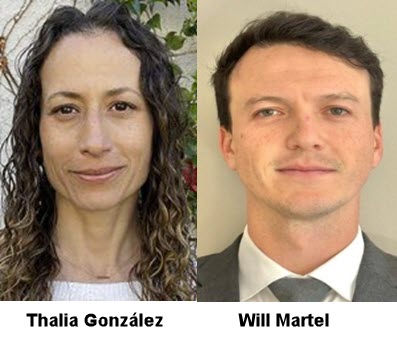
Excerpted From: Thalia González and Will Martel, Retrenchment, Segregation, and Public Education: A Five-Year Analysis of State Exclusionary School Discipline Legislation, 28 N.Y.U. J. Legis. & Pub. Pol’y 1 (2025-2026) (382 Footnotes) (Full Document)
 This Article aims to extend the growing line of legal literature interrogating intersections between retrenchment and anti-inclusion in public education. More specifically, it builds upon and complements existing studies of K-12 public schools as renewed sites of legal, social, and political contestations in the wake of school closures due to the COVID-19 pandemic, national protests and racial justice activism following the death of George Floyd in 2020, and the reelection of Donald Trump. Though this field of study is diverse in its scope, a clear stream of scholarly analysis has emerged tracking state and national legislation that operates to promote and preserve the exclusivity of whiteness or, as DeMarcus Jenkins critically observes, white dominance in public education occurring through the “unspoken grammar of anti-Blackness.”
As the field of education law and policy has rapidly transformed over the last five years--with state legislatures codifying new socio-spatial arrangements of exclusion and the swift actions by the Trump Administration to limit civil rights protections and divest from equity and inclusion9--the most pronounced area of attention has been on the “critical racialization of parents rights” and the promulgation of anti-Critical Race Theory (“anti-CRT”) measures championed by parental rights movement actors. For example, research in this line of scholarship has tracked, coded, and analyzed the importation of “divisive concepts” under Executive Order 1395012 into state law and local education policy. As of December 2024, the proliferation of anti-CRT measures included “249 local, state, and federal government entities across the United States [introducing] 870 anti-Critical Race Theory bills, resolutions, executive orders, opinion letters, statements, and other measures” in forty-nine states. Not surprisingly, many of the studies in this line of research have theoretically contextualized their findings under the temporal analysis of Critical Race Theory (e.g., “why now?”) to highlight a reform-retrenchment dynamic. For instance, LaToya Baldwin Clark specifically argues that “the anti-CRT measures’ timing reflects the temporal backlash to the racial-justice demands made by protestors in the summer of 2020, and the movement was still going strong through the end of 2022.”
However, retrenchment or regression in K-12 education law and policy, as well as the overarching state and federal rejection of color consciousness and civil rights, has not been limited to legislative or local action against Critical Race Theory or equity, diversity, and inclusion policies and practices more broadly. Scholars have also examined the post-2020 rise of anti-literacy legislation, with one report finding that nearly twice as many anti-literacy or book ban initiatives were sought nationwide over a three-month period in 2021 than during the entirety of 2020. As of December 2024, there were more than twenty-one states with anti-literacy and curricular bans affecting “more than 22 million children, almost half of the country’s public school students.” Additionally, more than sixteen states have advanced “Don’t Say Gay laws” that include prohibitions on instruction on LGBTQI+ issues, as well as restrictions on expressions of gender identity and the use of preferred pronouns. Similar to anti-CRT measures, Jonathan Feingold and Joshua Weishart argue such discriminatory censorship laws are a direct “assault on inclusive classrooms and curricula” with the goal of “thwart[ing] the anti-racist aspirations that animated 2020’s global uprising for racial justice.”
Regressive measures have also been advanced to control “nonnormative bodies” in K-12 public schools in the form of “anti-transgender legislation.” Research by the American Civil Liberties Union indicates that between 2021 and 2023, twenty-five bills restricting gender-based bathroom access were introduced in states such as Alabama, Minnesota, Tennessee, and Virginia. Paralleling studies of other discriminatory and anti-inclusive legislative measures, scholars engaged in this line of analysis foreground a temporal relationship between the racial justice movements of 2020 and the rise of the “anti-woke” parental rights movement and conservative rightwing authoritarian populist backlash to civil rights reforms. Whether viewed individually or collectively, scholarship across the field of critical education law has drawn sharp attention to the purpose and functionality of these measures--to erase, exclude, and punish students.
However, unaccounted for within this research are parallel analyses of the simultaneous rise of regressive school discipline legislation that increases physical segregation, including through in and out-of-school suspensions and expulsions, and embodies racial spatial dimensions of punitive practices. This absence is striking for three reasons. First, the similarities in backlash--rhetorically and tactically--between the historical (racial integration of public schools post-Brown v. Board of Education) and the contemporary (civil rights reforms to exclusionary school discipline from 2000-18) contexts. As we have examined in prior work, the early tropes and stereotypes of Black students requiring stringent discipline promoted by white segregationists during the first wave of exclusionary discipline laws post-Brown are being revived. Second, the temporal and geographic overlap between the state legislative landscapes briefly described supra and new exclusionary school discipline laws. There is no state represented in this study whose legislature has not also proposed or passed anti-CRT and anti-LGBTQI+ legislation in the last five years. Furthermore, cross-analysis confirms the co-existence of a “Parental Bill of Rights” and a “Teacher’s Bill of Rights” in two of the states. Third, and relatedly, there are similarities in impacted student populations. Numerous studies have demonstrated the associations of race, gender, and sexual orientation with discipline disparities. Data from the Office for Civil Rights report for the 2020-21 school year demonstrates post-school reopening disparities in exclusionary discipline. For example, the data shows that “Black boys were nearly two times more likely than White boys to receive an out-of-school suspension or expulsion,” and students with disabilities “were overrepresented in referrals to law enforcement and school-related arrests.” Additionally, the 2021 National School Climate Survey found that “25.2% of LGBTQ+ students were disciplined for public affection.”
Given such clear convergences, the absence of a systematic examination of regressive school discipline bills since 2020 obscures the fuller picture of the permissive return of physical segregation in K-12 schools. This Article aims to correct this oversight. However, this project is not intended to simply serve as an academic exposition on the permanence of anti-Blackness and white supremacy in public primary education. It also seeks to provide a mapping for education justice attorneys and advocates to protect the rights of Black, Latiné, and American Indian and Native Alaskan children, LGBTQI+ children, and children with disabilities subjected to the structural violence of exclusionary disciplinary practices under new education laws across the country.
To achieve its twin aims, this Article is structured as follows. While the Article proceeds with an assumption of a reader’s familiarity with exclusionary school discipline in practice and policy, Part I serves as a brief primer to foreground the data and analysis presented in Parts III and IV. Part II provides an overview of the empirical context and theoretical framework of the Article and details data collection methods. Part III presents a descriptive overview of the findings from a nationwide perspective. Part IV describes emerging data trends and aggregates state-level results into nine distinct, yet complementary, operational taxonomies, including increased authority for exclusion by teachers, new behavioral categories permitting or requiring exclusion, new forms of exclusion, and rescission of prior protections. The Article concludes by considering the growing threat of carceral logics and punitive architectures as retrenchment escalates, not only in the twenty-four states represented in the data but at the federal level.
[ . . . ]
Education law and policy have long been marked by cycles of reform and retrenchment across a constellation of exclusions rooted in American racism, subordination, and whiteness. Within the current moment of education polycrisis, this dialectic relationship has manifested bidirectionally along a continuum of actions, e.g. local, state, and federal. While this article focuses on state legislative measures that function--and, in many instances, directly aim--to erase, exclude, and punish students, this is not an isolated phenomenon. For example, since January 2025, the Trump Administration has sought to eliminate civil rights protections for marginalized students, redefine discrimination under Title IV, rescind federal funding for “race-conscious” initiatives, and promote disciplinary practices and definitions unsubstantiated by education research199--all of which threaten the future of equitable access to public education. Coupled with measures by state actors, the “parental rights” movement, as noted supra, has also extended its reach and mobilized race and class privileges to act against empirically evidenced non-punitive and exclusionary discipline.
As regression has occurred and expanded at local, state, and federal levels since 2020, legal scholarship has tracked, examined, and named diverse forms of anti-inclusion efforts from anti-CRT measures to literacy bans to anti-gay and anti-transgender bills. However, unaccounted for within this education civil rights literature is analysis of the parallel rise of state anti-inclusion legislation that operationalizes educational carcerality and codifies (or recodifies in multiple instances) physical segregation of children from their public school classrooms. To address this gap, this study presents the first systematic analysis of regressive state exclusionary school discipline education measures proposed between 2020 and 2025. Its findings contribute to the literature in two key ways: first, by presenting a comprehensive survey of the frequency, form, and location of regressive exclusionary school discipline bills; and second, by extending the scope of the constitution of educational retrenchment. In short, whether through legislation mandating physical segregation under a “three-strikes” framework or the rescission of prior protections, the exclusivity of public education is rapidly transforming across the states, with much at stake for Black, Latiné, American Indian and Native Alaskan, and LGBTQI+ children, and children with disabilities who must attempt to learn within these (re)newed geographies of structural violence.
Thalia González, J.D., Hervey Chair and Professor of Law; Faculty Co-Director, Center for Racial and Economic Justice, the University of California, College of the Law, San Francisco.
Will Martel, J.D., the University of California, College of the Law, San Francisco.