
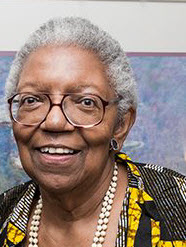
 Vernellia R. Randall, When Intent Isn’t Enough: Tourette Syndrome, the N-Word, and Responsibility at BAFTA, Racism.org (February 27, 2026)
At the BAFTA awards ceremony, John Davidson, a man with Tourette syndrome, involuntarily shouted the N-word — hard “R” — while Michael B. Jordan and Delroy Lindo (two Black men) stood on stage presenting an award.
Let us begin with clarity.
If shouting the N-word was the result of a neurological tic, then it was not a conscious act of racism. Tourette’s is real. Coprolalia is real. Involuntary vocalizations are real.
But so is history.
The N-word is not just profanity. It is a weapon forged in slavery, sharpened during Jim Crow, and still used today to mark Black bodies as disposable. You cannot separate that history from the sound of it landing in a room — especially when it lands on two Black men under global lights.
Intent and impact are not the same thing.
Level One: Personal Responsibility Without Cruelty
Disability does not erase responsibility. It complicates it.
When I accidentally run into someone with my mobility cart, I do not say, “I’m disabled, I didn’t mean to.” I say, “I’m sorry. Are you hurt?” Not because I intended harm, but because harm may have occurred.
Michael B. Jordan and Delroy Lindo were placed in a humiliating position in front of millions. Even if they understood intellectually that the outburst was involuntary, understanding does not neutralize injury. An immediate acknowledgment — directed to them by name — would have modeled both accountability and dignity.
Compassion does not require silence about impact.
And recognizing impact does not require cruelty toward John Davidson.
Both can be true.
Level Two: Institutions That Explain Instead of Apologize
When Alan Cumming, the host of the BAFTA ceremony, came on stage and explained that the outburst was related to Tourette’s syndrome, the institution-centered explanation was appropriate. It helped the audience understand what had happened. But it did not center the harm to Michael B. Jordan and Delroy Lindo — and that was the problem.
Explanation is not an apology.
A mature response would have sounded like this:
We understand this was involuntary and related to Tourette’s syndrome. We have compassion for John Davidson and recognize that this was not intentional. We also recognize the impact of that word. We apologize to Michael B. Jordan and Delroy Lindo and to our audience.
Instead, the response addressed the cause without directly addressing the injury.
Level Three: The Editorial Decision
Here is where accountability becomes unmistakable.
The ceremony was broadcast on delay. Producers reportedly had time to edit the word out before it reached millions of homes. They chose not to.
That is not a neurological tic. That is a human decision.
Broadcasters edit content constantly. They bleep profanity. They cut time. They protect brand standards. Editing out a racial slur is not censorship of truth. It is responsible stewardship.
Once the word left the auditorium, producers had a second chance to prevent further harm — including harm to Michael B. Jordan and Delroy Lindo’s public moment. They declined.
That decision belongs entirely to the institution.
This Is Not a Competition Between Disabilities and Race
We do not need to pit disability justice against racial justice.
We can acknowledge that Tourette’s is real.
We can acknowledge that the outburst was involuntary.
We acknowledge that the N-word carries generational harm.
We can acknowledge that harm occurred.
We can expect apologies.
We can expect better editorial judgment.
None of these acknowledgments or expectations cancel the others.
The Deeper Issue
What troubles me most is not that a neurological tic occurred. It is that once it occurred, the systems in place failed to respond with clarity and moral steadiness.
Too often, institutions treat racial harm as a public relations problem rather than a human one. Too often, explanation replaces empathy. Too often, decision-makers underestimate the weight of language that has been used for centuries to justify violence.
The lesson here is not outrage.
The lesson is maturity.
If we cannot distinguish intent from impact, we fail.
If we cannot extend compassion without erasing accountability, we fail.
If institutions with editorial power refuse to mitigate foreseeable harm, they fail most of all.
Accountability is not punishment.
Acknowledgment is not condemnation.
Editing out a slur is not rewriting history.
It is responsibility.
And responsibility is the price of operating on a global stage.
Selected References for Further Reading
Readers who wish to explore the neurological, historical, and structural dimensions discussed here may consult the following foundational works:
Tourette Syndrome and Coprolalia
James F. Leckman & Donald J. Cohen (eds.), Tourette’s Syndrome—Tics, Obsessions, Compulsions: Developmental Psychopathology and Clinical Care (Wiley, 1999).
Douglas W. Woods et al., Managing Tourette Syndrome: A Behavioral Intervention for Children and Adults (Oxford University Press, 2008).
The N-Word and Its Historical Weight
Randall Kennedy, Nigger: The Strange Career of a Troublesome Word (Pantheon Books, 2002).
Jabari Asim, The N Word: Who Can Say It, Who Shouldn’t, and Why (Houghton Mifflin, 2007).
Systemic Racism and Intersectionality
Kimberlé Crenshaw, “Mapping the Margins: Intersectionality, Identity Politics, and Violence against Women of Color,” 43 Stanford Law Review 1241 (1991).
Eduardo Bonilla-Silva, Racism Without Racists: Color-Blind Racism and the Persistence of Racial Inequality in America (Rowman & Littlefield, multiple editions).
Vernellia R. Randall, Professor Emerita of Law, University of Dayton School of Law. This article is the sole intellectual and scholarly work of Vernellia Randall. ChatGPT was used only as a drafting aid comparable to a research or editing assistant. All concepts, analysis, legal reasoning, interpretations, and conclusions are entirely the author’s own, and the author assumes full responsibility for the content.