
 Table of Contents
- Whiteness and the Presumption of American Innocence
- September 11 Did Not Occur Outside History
- Racializing the Enemy at Home
- Group Suspicion Displaced Individual Responsibility
- The “War on Terror” and the Geography of Human Worth
- Torture and Racial Immunity From the Law
- The Security State Reached Black Communities Too
- Palestine, Gaza, and the Continuing Hierarchy of Grief
- Iran and the Politics of Historical Amnesia
- From the First Muslim Ban to the Second Trump Era
- What an Honest Remembrance Requires
On September 11, 2001, nineteen members of al-Qaeda murdered 2,977 people. The victims were workers, travelers, first responders, parents, children, immigrants, and citizens from more than ninety nations. Their deaths were real. Their families’ grief was profound. The attack was an indefensible act of terrorism.
But the United States did not limit its response to pursuing the people responsible for the attack. It turned a national tragedy into permission to target entire populations.
For twenty-five years, the dominant American account of September 11 has been a story of American innocence, foreign evil, and justified retaliation. That account erases the racial violence inflicted on Muslims, Arabs, South Asians, Sikhs, and others perceived to belong to those communities. It minimizes mass detention, government surveillance, torture, indefinite imprisonment, and two decades of warfare. It pushes the millions of people killed, injured, or displaced in post-September 11 war zones to the margins of the American story.
It also removes American conduct from history.
A racial-justice examination of September 11 asks what the conventional remembrance refuses to ask: How did a criminal attack by nineteen men become justification for treating millions of people as dangerous, disposable, and unworthy of the rights and protections Americans demanded for themselves?
The answer requires confronting whiteness.
Whiteness and the Presumption of American Innocence
Whiteness is not simply personal hostility by individual white people. It is a political, legal, and cultural system that places white lives, Western interests, and American power at the center of the human story.
Professor Cheryl Harris described whiteness as a form of property—a protected status that historically carried legal, economic, political, and social benefits. Whiteness included the power to define who belonged, who could be excluded, whose suffering mattered, and whose claims the law would recognize.
That power did not disappear when explicitly racist laws were repealed. It remains embedded in institutions, legal rules, public policy, and national narratives.
After September 11, whiteness operated through the presumption that the United States was an innocent nation attacked without cause, context, or history. American grief became universal grief. American fear became justification for expanded government power. American deaths were individualized through names, photographs, biographies, memorials, and annual ceremonies.
Meanwhile, people killed in the wars that followed were commonly reduced to estimates. They became “enemy combatants,” “suspected militants,” or “collateral damage.”
The problem was never that Americans mourned their dead. The problem was that the United States converted its grief into authority to inflict suffering on people who had nothing to do with the attack.
Whiteness transformed collective punishment into reasonable policy and made equal concern for non-American lives appear radical.
September 11 Did Not Occur Outside History
The United States did not enter the Middle East on September 11, 2001. It had spent decades intervening in the region, protecting access to oil, supporting selected governments, supplying weapons, conducting military operations, and opposing political movements that threatened American strategic interests.
In 1953, American and British intelligence services helped overthrow Iranian Prime Minister Mohammad Mosaddegh after his government nationalized Iran’s oil industry. Declassified records confirm that the CIA organized and directed the coup, which removed Mosaddegh and preserved the Shah’s rule. The Shah’s government became increasingly authoritarian and repressive.
The United States has also supplied weapons, military assistance, political support, and security training to governments that denied political freedom and used violence against their own populations. American officials have routinely spoken about democracy while supporting repression when repression served American economic, military, or geopolitical interests.
That contradiction has consequences.
When people are imprisoned, tortured, displaced, or silenced by governments supported by the United States, they may see the United States as a participant in their oppression. Their anger does not necessarily stop with their immediate rulers.
The point is not to catalogue every authoritarian government the United States has supported. The pattern itself is undeniable: when repression advances American interests, democracy becomes negotiable.
Yet when resentment or resistance follows, the United States presents that hostility as irrational hatred of American freedom.
Terrorism remains the responsibility of those who commit it. But refusing to examine the conditions under which terrorism develops is not patriotism. It is deliberate historical blindness.
Racializing the Enemy at Home
Within hours of the September 11 attacks, millions of people were placed under suspicion because of their names, religion, clothing, ancestry, skin color, or perceived nationality.
Public anger did not remain focused on al-Qaeda. Muslims, Arabs, South Asians, Sikhs, and people mistakenly perceived to belong to those communities were threatened, assaulted, fired, denied services, and attacked in their homes, businesses, and places of worship.
The FBI recorded 481 anti-Islamic hate-crime incidents in 2001, compared with 28 in 2000—a seventeen-fold increase. The 2001 incidents involved 546 offenses and 554 victims. Because participation in the FBI’s hate-crime reporting system was incomplete and voluntary, those numbers cannot capture the full extent of the violence. FBI, Hate Crime Statistics 2001
Some victims were not Muslim. Sikh men were attacked because turbans and beards had become racial signs of the imagined terrorist. South Asians from different nations and religious traditions were swept into the same threatening category.
The attackers did not need to know who their victims were. They acted on who they believed the victims to be.
That is how racialization works. It takes people with different nationalities, cultures, histories, and religions and constructs them as a single dangerous race.
The federal government condemned some of the private violence. The Justice Department created an initiative to combat post-September 11 discrimination against Arab, Muslim, Sikh, and South Asian Americans and people perceived to belong to those groups.
At the same time, the government embedded similar assumptions into immigration enforcement, detention, surveillance, airport security, and national-security policy.
The government’s message was contradictory but clear: private citizens should not assault Muslims, but government agencies could treat Muslim identity, Arab ancestry, immigration status, religious practice, and national origin as evidence of possible danger.
Group Suspicion Displaced Individual Responsibility
American law claims to rest on individual responsibility. The government is expected to investigate a person because evidence connects that person to wrongdoing—not because the person shares a religion, nationality, or ancestry with someone who committed a crime.
After September 11, that principle gave way to group suspicion.
The federal government detained hundreds of noncitizens, often on immigration charges, while claiming to determine whether they had connections to terrorism. The Justice Department’s inspector general examined the treatment of 762 people placed on an immigration custody list because the FBI believed they might have a connection to the September 11 attacks or terrorism generally, or because the FBI had not yet determined whether such a connection existed.
Some remained confined for months. The inspector general found prolonged detention and excessively restrictive conditions. A supplemental investigation concluded that some correctional officers physically and verbally abused some detainees. The investigation also found unnecessary strip searches, interference with attorney communications, and other systemic mistreatment.
These findings did not come from a political opponent or advocacy organization. They came from the Justice Department’s own oversight office.
The government also created the National Security Entry-Exit Registration System. One part of NSEERS required certain male noncitizens, generally sixteen years of age or older, from designated countries to appear for registration, fingerprinting, photographs, questioning, and periodic reporting. Nearly all the designated countries were predominantly Muslim.
NSEERS did not formally classify people by race or religion. It used nationality, age, sex, and immigration status as substitutes. Immigration law became a vehicle for questioning, monitoring, detaining, and removing people without proof that they had participated in terrorism.
Race was hidden behind nationality, religion, immigration status, and geography. The language appeared neutral, but the burdens fell overwhelmingly on racialized Muslim, Arab, African, Middle Eastern, and South Asian communities.
This was not merely racial prejudice among frightened individuals. It was racism exercised through law and administrative power.
The “War on Terror” and the Geography of Human Worth
The United States invaded Afghanistan after the Taliban refused American demands to surrender al-Qaeda leaders and close the organization’s training camps. It then invaded Iraq in 2003, even though Iraq did not carry out the September 11 attacks.
The official 9/11 Commission reported that it found no evidence that Iraq and al-Qaeda had developed a collaborative operational relationship. It also found no evidence that Iraq cooperated with al-Qaeda in carrying out attacks against the United States.
Nevertheless, the Bush administration repeatedly blurred the distinction between al-Qaeda, Iraq, and other governments or populations it wanted Americans to fear. September 11 created the political climate in which an unrelated war could be sold as national defense.
The human consequences were staggering.
Brown University’s Costs of War Project estimates that between 905,000 and 940,000 people—including civilians, combatants, journalists, humanitarian workers, and military personnel on all sides—died from direct war violence in major post-September 11 war zones through 2023. Between approximately 408,000 and 432,000 of those killed were civilians.
These totals include deaths caused by every party to the conflicts. But they occurred within wars the United States initiated, expanded, financed, or substantially shaped. America cannot launch a war and then disclaim responsibility for the devastation that follows.
Brown researchers separately estimate that 3.6 million to 3.8 million people died indirectly because war destroyed health systems, economies, food supplies, infrastructure, and the environment. Combining direct and indirect deaths produces an estimated total of at least 4.5 million to 4.7 million people, although the precise number remains unknown.
These deaths do not receive the same public attention as the people killed on September 11. There are no nationally televised American ceremonies where the names of Afghan, Iraqi, Pakistani, Somali, Syrian, or Yemeni children are read. Their photographs do not define the nation’s understanding of the wars. Their surviving families rarely appear in American accounts of the cost of September 11.
The racial hierarchy is unmistakable. American victims have names, families, histories, and dreams. Foreign victims become numbers.
American deaths are treated as atrocities demanding justice. Deaths produced by American-led wars become unfortunate but acceptable costs.
Racial justice rejects that hierarchy. Every civilian life has equal human value. This is not moral equivalence. It is moral consistency.
Torture and Racial Immunity From the Law
After September 11, the United States created and used detention sites where people were held outside the ordinary protections of American courts. The government employed secret prisons, extraordinary rendition, indefinite detention, and interrogation practices—including waterboarding, prolonged sleep deprivation, stress positions, forced nudity, and threats—that constitute torture or cruel, inhuman, and degrading treatment.
The Senate Intelligence Committee documented the CIA’s detention and interrogation program in a study exceeding 6,700 pages. The publicly released executive summary described treatment more brutal than the CIA had disclosed and found that the agency repeatedly misrepresented both the operation and effectiveness of the program.
These policies depended on placing detainees outside the recognized community of human beings entitled to rights. The term “enemy combatant” did more than describe a legal category. It helped transform people into rightless bodies subject to government control.
The United States condemned the September 11 attackers for disregarding civilian life and basic human decency. It then claimed authority to imprison people without trial, transfer them to secret facilities or foreign governments, and subject them to cruel and degrading treatment.
Whiteness allowed the United States to violate the law without being defined as lawless.
Violence committed against Americans supposedly revealed the permanent evil of the attacker. Violence committed by the United States was described as a mistake, an excess, a breakdown in procedure, or an understandable response to fear.
That double standard is racial and imperial immunity.
The Security State Reached Black Communities Too
The post-September 11 security state did not affect only Muslims, Arabs, immigrants, or people living abroad.
The United States already had a long history of using surveillance, infiltration, selective enforcement, and police violence against Black communities. Black political organizations and leaders had been monitored and disrupted. Black neighborhoods had been treated as occupied territory. Black people had long lived under a presumption of criminality.
The “war on terror” added money, technology, equipment, and new legal justifications to that existing structure.
State and major urban-area fusion centers became permanent information-sharing hubs connecting federal, state, local, tribal, territorial, and private-sector entities. Although presented as tools for terrorism prevention, many developed broader “all-crimes” or “all-hazards” missions
This expanded the government’s capacity to collect, analyze, and circulate information about people and activities far beyond an identifiable terrorist threat. These institutions operated within a criminal legal system already shaped by anti-Black racism, aggressive policing, and the surveillance of political dissent.
Black Muslims stood at the intersection of anti-Black racism and Islamophobia. Immigrant communities confronted increasing coordination between local policing and federal immigration enforcement. Other communities of color faced security practices built on the same presumption that certain populations are dangerous and require constant control.
The government did not construct an entirely new system after September 11. It expanded a system with deep roots in slavery, Indigenous removal, Jim Crow, immigration exclusion, political surveillance, and the criminalization of Black resistance.
The targets changed and expanded. The underlying racial logic remained.
Palestine, Gaza, and the Continuing Hierarchy of Grief
The post-September 11 framework also shaped how the United States discussed Palestine.
Palestinian demands for freedom, political rights, and an end to displacement were increasingly forced through the narrow language of terrorism and Israeli security. An entire people came to be treated as a potential threat.
Hamas’s killing of civilians and taking of hostages on October 7, 2023, were crimes. But those crimes did not suspend international law or authorize collective punishment, forced displacement, starvation, or indiscriminate attacks on civilian life.
The United States supplied Israel with extensive military, financial, and diplomatic support during the war in Gaza. It also repeatedly used its power in the United Nations to shield Israel from international pressure.
On September 18, 2025, the United States cast the sole vote against a Security Council resolution demanding an immediate, unconditional, and permanent ceasefire in Gaza, the release of all hostages, and the removal of restrictions on humanitarian aid. The other fourteen members voted in favor.
The racial hierarchy appeared in both policy and language.
Israeli victims were presented as individuals whose deaths required justice. Palestinians were commonly described as a population among whom terrorists might be hiding. Israeli fear was treated as politically decisive. Palestinian fear was treated as background noise. Israeli security was framed as a right. Palestinian security was framed as a threat to be controlled.
Palestinian humanity does not require a qualification or a preliminary reassurance that Israeli lives also matter. Human rights are universal, or they are privileges distributed according to political and racial power.
The lesson the United States should have learned from September 11 was that attacks on civilians are wrong. Instead, it learned to distinguish between civilians whose deaths are intolerable and civilians whose deaths can be justified.
Iran and the Politics of Historical Amnesia
Iran is routinely presented in American political discussion as if Iranian hostility toward the United States emerged without history.
The repression committed by Iran’s government is real. So is the history of American intervention.
The 1953 overthrow of Mosaddegh, decades of support for the Shah, economic sanctions, military threats, and repeated interference shaped Iranian attitudes toward the United States. In June 2025, American military action moved beyond threats when U.S. forces struck the Fordow, Natanz, and Isfahan nuclear facilities.
Condemning repression by Iran’s government does not erase American responsibility. Both governments can be accountable at the same time, but only one routinely presents its own intervention as innocent and historically disconnected from the hostility that follows.
Whiteness encourages historical amnesia. It permits the United States to intervene in another country, help empower a repressive government, impose decades of sanctions and threats, undertake direct military action, and then describe the resentment produced by that history as irrational hatred.
Power does not erase causation. Nations, like individuals, must be accountable for what they do.
From the First Muslim Ban to the Second Trump Era
The racial logic unleashed after September 11 did not disappear when the immediate crisis passed. It helped prepare the ground for Donald Trump’s first administration and returned with renewed force during his second.
Before taking office, Trump called for a “total and complete shutdown of Muslims entering the United States.” He later issued entry restrictions overwhelmingly affecting nationals of Muslim-majority countries. In Trump v. Hawaii, the Supreme Court acknowledged Trump’s earlier statements but accepted the government’s national-security explanation and deferred to presidential power.
In June 2025, Trump imposed complete entry restrictions on nationals of twelve countries and partial restrictions on nationals of seven others.
A December 2025 proclamation continued the complete restrictions on those twelve countries and added seven more. The affected countries included Afghanistan, Iran, Libya, Somalia, Sudan, Syria, and Yemen. The proclamation also completely restricted entry by people traveling on documents issued or endorsed by the Palestinian Authority and imposed or continued partial restrictions on numerous other countries.
These policies contain exceptions for some lawful permanent residents, existing visa holders, specified visa categories, and people granted case-by-case waivers. Those exceptions do not change the basic structure: the government imposed sweeping burdens based on nationality and travel documents rather than evidence of individual wrongdoing.
This is one of the most dangerous legal legacies of September 11: government power based on group suspicion has become normal.
The language changes. A Muslim ban becomes an entry restriction. Racial profiling becomes risk assessment. Religious discrimination becomes national-security screening. Government targeting becomes extreme vetting.
Changing the language does not change the racial structure.
What an Honest Remembrance Requires
An honest remembrance of September 11 must begin with the 2,977 people who were killed, but it cannot end with them.
It must remember the Muslims, Arabs, Sikhs, South Asians, and others attacked in the backlash. It must remember the people detained without evidence connecting them to terrorism. It must remember those tortured in American custody. It must remember civilians killed in Afghanistan, Iraq, Pakistan, Somalia, Syria, Yemen, and elsewhere. It must remember the families displaced, the communities destroyed, and the children who grew up surrounded by war.
It must also confront the whiteness that determined whose pain became sacred and whose suffering became acceptable.
The lesson of September 11 should never have been that American fear authorizes unlimited government power. Grief does not justify racism. National security does not erase constitutional rights. Violence against one population cannot be answered by making another population disposable.
The United States cannot build genuine security through racial profiling, collective punishment, military domination, or historical denial. It cannot claim to promote democracy while supporting repression. It cannot claim allegiance to human rights while treating those rights as privileges reserved for Americans and their allies.
Twenty-five years after September 11, remembrance must become accountability.
That means ending policies based on racialized suspicion. It means rejecting indefinite detention and torture. It means demanding transparency and legal accountability for civilian deaths. It means restricting executive war-making power. It means refusing unconditional military support for governments that violate human rights. It means protecting Muslim, Arab, Sikh, South Asian, immigrant, Black, and Palestinian communities from both private violence and government power.
Most of all, it means abandoning the belief that American lives matter more because they are American.
The victims of September 11 deserved justice. Justice, however, was never served by creating millions of additional victims. A nation does not honor its dead by denying the humanity of other people.
Racial justice requires us to remember every life—and to hold American power accountable for every life it treated as disposable.
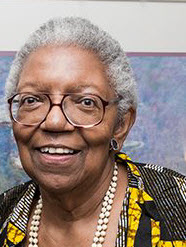
Vernellia R. Randall, Professor Emerita of Law, University of Dayton School of Law. This article is the sole intellectual and scholarly work of Vernellia Randall. ChatGPT was used only as a drafting aid comparable to a research or editing assistant. All concepts, analysis, legal reasoning, interpretations, and conclusions are entirely the author’s own, and the author assumes full responsibility for the content.