
Abstract
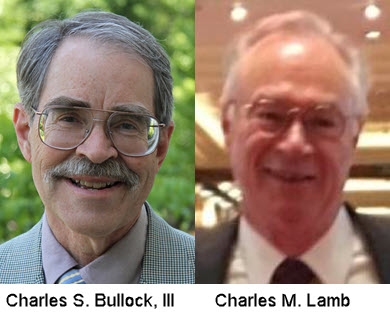
Excerpted From: Charles S. Bullock, III and Charles M. Lamb, The Relics of Jim Crow: Fair Housing Enforcement in the North and Midwest, 35 Southern California Review of Law & Social Justice 1 (Winter 2026) (157 Footnotes) (Full Document)
 The right to fair housing is designed to combat two deeply rooted American problems: housing discrimination and housing segregation. Highly segregated neighborhoods--urban and suburban--persist throughout much of the United States. In contrast, although flagrant housing discrimination practices have declined since the 1960s, others have emerged to take their place. To make matters worse, fair housing enforcement by federal, state, and local governments frequently remains ineffective and inefficient.
Given these problems, this article examines an important civil rights question: How have the nation’s regions outside the South responded to legal complaints alleging discriminatory housing practices? We initially tackled this question in “Jim Crow North and Fair Housing Enforcement” (“Jim Crow I ”), which explored favorable outcomes in complaints filed under the Fair Housing Act of 1968 (Title VIII of the Civil Rights Act of 1968) in the 13 Northeastern states from Maine to Virginia. One significant finding was that Black and Latino complainants were both least likely to achieve favorable outcomes in their Title VIII claims in New York and New Jersey (federal Region II), when compared to the 11 other Northeastern states in Regions I and III. We then focused on aspects of law, race relations, and public policy in New York and New Jersey to help explain their low favorability rates by investigating their levels of residential, school, and economic segregation, as well as their lack of local Fair Housing Assistance Program (FHAP) agencies, which are funded by the U.S. Department of Housing and Urban Development (HUD).
The present study (“Jim Crow II”) explores how Title VIII has been enforced in 21 Northern and Midwestern states. Jim Crow II is intended to clarify and extend our understanding of fair housing enforcement, as many Midwestern states have markedly different demographic characteristics from Northeastern states. For example, do New York and New Jersey continue to rank suprisingly low in favorable outcomes in Jim Crow II if we rely on a very different federal classification of Northern and Midwestern states? In Jim Crow II, New York and New Jersey are compared to 19 as opposed to 11 states, with Delaware, Maryland, Virginia, and West Virginia dropping out of the rankings and Indiana, Illinois, Michigan, Ohio, Wisconsin, Iowa, Kansas, Minnesota, Missouri, Nebraska, North Dakota, and South Dakota added to the equation--will this change in research design appreciably affect our understanding of fair housing enforcement in New York and New Jersey, or will they continue to rank poorly in terms of Title VIII favorable outcomes for people of color?
Part I of Jim Crow II presents major concepts and data relating to this study, including levels of Black-white and Latino-white residential segregation from 1980 to 2020. Part II dissects federal, state, and local enforcement of the Fair Housing Act. Part III explains the meaning of favorable outcomes in cases involving claims of racial and ethnic discrimination in violation of Title VIII and how we measure them. Part IV surveys prior research findings relating to the analysis in this article. Part V compares the extent to which these 21 states in the North and Midwest decided Title VIII complaints in favor of Black Americans. Similarly, Part VI compares the extent to which these states resolved Title VIII complaints in support of Latino complainants. After Part VII provides a few final comparisons, the last section underscores our conclusions and core finding, namely that “Jim Crow North” is a concept that applies to various degrees to Northern and Midwestern states--not only to New York and New Jersey. Jim Crow North existed, of course, in more of a de facto form than it did in the South, but it was nevertheless effective in establishing and maintaining a system of housing segregation thoroughly rooted in racial and ethnic discrimination. This finding is noteworthy because even though Southern states historically lagged considerably behind the remainder of the country in protecting civil rights, the phenomenon of Jim Crow discrimination is not restricted to the South in the field of housing; rather, it existed in states typically viewed as much more liberal.
[ . . . ]
Residential segregation has long plagued the United States’ housing market. We approach this topic by examining the incidence of favorable administrative outcomes in Fair Housing Act complaints between 1989 and 2010 in 21 Northern and Midwestern states that historians refer to as Jim Crow North. We assume that Title VIII complaints are equally meritorious across the states. It follows that fluctuations in the rates of complainants’ success from state to state are the product of differences in the processing of Fair Housing Act cases by HUD as well as state and local governments participating in FHAP. Variations in favorability rates could result from differences in the standards applied, training of staff, commitment of supervisors, staff biases, or other factors. The decisions, especially when rendered by FHAPs, may represent the demands of people and groups with the greatest influence at the state and local levels. If housing segregation is the preference of many in a state, FHAPs may decide a lower proportion of Fair Housing Act complaints in support of Black and Latino complainants. Because, nationwide, local FHAPs more often find for complainants than does HUD, another possibility is that where HUD processes all complaints, favorable decisions may be less frequent. Based on nationwide data, state FHAPs are even less responsive to complaints than HUD, suggesting that complainants will be least successful where state FHAPs exist.
Measurement of favorable outcomes is a realistic way to assess the effectiveness of Title VIII enforcement because the lower the favorable outcome rates, the more likely the legislation is not being seriously or aggressively enforced. Higher rates of favorable outcomes reflect more rigorous enforcement. This, in turn, reveals how various government agencies exercise discretion in civil rights decision making: some states frequently provide favorable outcomes to people of color-- which should gradually effect discrimination and segregation over time--while others will not. Based on the research reported here, this approach allows us to compare 21 Northern and Midwestern states to suggest which most likely qualify as Jim Crow North states.
Given this approach to understanding federal, state, and local fair housing enforcement, we reach three broad conclusions. First, cooperative federalism approaches for attacking controversial public policy problems are alive and well in America. In this study, fair housing enforcement is absorbed into the workings of intergovernmental relations through Congress’s adoption of the concept of substantial equivalency and its operationalization through HUD’s Fair Housing Assistance Program. Because Title VIII requires substantially equivalent fair housing laws to participate in FHAP, neither a national, state, nor local approach dictates fair housing enforcement. Even though fair housing enforcement standards are still usually developed at the federal level, since the 1980s, a successful cooperative federalism program has emerged, with FHAP financial assistance providing an incentive to state and local governments to strengthen fair housing laws--or sometimes to enact a jurisdiction’s first housing discrimination law--and to help implement national legislation. As a result, subnational FHAP agencies have usually responded to federal oversight and direction, taken their enforcement responsibilities seriously, and supported national antidiscrimination housing enforcement in constructive ways.
Second, we focus on how the Fair Housing Act has been enforced in 21 Northern and Midwestern states by calculating favorable outcomes in Title VIII complaints--the extent to which they were decided in support of Black and Latino Americans from 1989 to 2010. Even between adjacent states and states with similar demographic traits, the analysis shows significant variations in favorable outcomes across the North and Midwest. In the North, for example, New Jersey and New York provided similar rates of favorable outcomes for Black people (22.9% compared to 23.4%). Yet New Jersey and New York differed noticeably in terms of favorable outcomes for Latino complainants (33.3% compared to 19.4%). In the Midwest, North Dakota resolved 45.5% of its Latino complaints but only 19.3% of its Black complaints in support of Title VIII complainants. South Dakota, by contrast, reached favorable outcomes for 25.0% of its Latino complaintants and 28.6% of its Black complaintants. More generally, both Black and Latino complainants had a reasonable chance to obtain a favorable outcome from their Title VIII claims in Nebraska, Kansas, Rhode Island, Pennsylvania, and Connecticut (among other states), but Latino complainants were quite likely to lose their claims in New York, Indiana, and Massachusetts (among other states).
Such comparisons demonstrate that governments in different regions of the country vary dramatically in the way they resolve Fair Housing Act complaints. Geography matters, and it makes a significant difference in what state or locality a Title VIII complaint is filed. On the one hand, 18 of 21 states achieved higher rates of favorable outcomes for Latino than Black complainants, and those differences at times are large, as in Illinois and Maine. But this is not always the case, as Iowa and New York more often provided favorable outcomes to Black than Latino Americans, though those differences are smaller. The difference between favorable outcomes for Latino and Black complainants is greater than 10 percentage points in Illinois, Maine, New Jersey, North Dakota, and Rhode Island. Elsewhere, the difference between favorable outcomes for Black and Latino complainants is less than a percentage point in Indiana, Massachusetts, and Michigan.
Third, these comparisons suggest that “Jim Crow North” is a concept that in practice applies to Northern and Midwestern states. Given this analysis, perhaps Indiana best qualifies as a Jim Crow North state, although others--including but not limited to New York, New Jersey, Massachusetts, Michigan, and Minnesota--should be carefully investigated. This article remains a preliminary examination, though, and more studies are needed to determine whether these conclusions are justifiable and the extent to which they apply elsewhere in the North, the Midwest, and ultimately the West.
Further research is also needed to understand the sizable differences in responses to Latino and Black complainants in many states. One way to approach this is provided in Jim Crow I, where we studied favorable outcomes in the 13 Northeastern states and discovered that Black and Latino complainants are both least likely to achieve favorable results in New York and New Jersey. We then examined facets of law, public policy, and race relations in these states to help explain their low rates of favorable outcomes by investigating their levels of residential, school, and economic segregation, as well as their lack of local FHAP agencies. Again, those results strongly suggested a causal link.
At present, we can only speculate as to other possible explanations for the evidence of Jim Crow North and Jim Crow Midwest. One plausible explanation for the outcome variations reported here is that, despite efforts to encourage a common interpretation of HUD’s Fair Housing Act regulations and enforcement, differences can arise in HUD regional and district offices or in state and local FHAP agencies. Despite attempts to ensure that FHAP agencies apply substantially equivalent standards as HUD, norms may develop in state or local FHAP offices to require different or higher levels of proof of discrimination. Government employees processing Title VIII complaints may be more sensitive to the factual situations outlined in certain cases compared to others. Employees in civil rights agencies may identify with complainants who share their race or ethnicity, especially if they have encountered similar behavior to that alleged in a complaint. Survey research establishes that Black Americans are more likely than whites to believe that racism remains a problem and that Black people more often face discrimination than whites.
It is also conceivable that Latino complainants fare better than Black complainants in Title VIII cases because the unfair practices cited by the former are, overall, more egregious than those encountered by the latter. The Black Civil Rights Movement predates comparable Latino community activism. A longer period of demanding equal treatment may have made Black Americans unwilling to tolerate a wider range of discriminatory behavior. Beyond that, heightened levels of concern around contacting public agencies for fear that it may increase encounters with immigration enforcement may make some Latino people hesitant to file complaints. If Latino Americans are less likely to complain, the complaints they do file may involve more straightforward or severe violations than those filed by Black people.
Regardless of these possible explanations, America’s entrenched political polarization will probably reduce the likelihood of constructive changes in Title VIII enforcement in the North and Midwest in the foreseeable future. President Trump staunchly disagrees with basic principles of equal housing opportunity, and his rhetoric and actions may sway some Americans to oppose effective federal, state, and local fair housing enforcement. Moreover, Northern and Midwestern opposition to federal fair housing law and enforcement dates back for decades, being particularly vigorous in the 1960s and during the Nixon administration. Given the persistence of residential segregation in much of the North and Midwest, what combination of factors could trigger dramatic and lasting changes in that fundamental trend?
Distinguished Professor of Public and International Affairs, Richard B. Russell Chair in Political Science, and Josiah Meigs Distinguished Teaching Professor at the University of Georgia. We thank Zarifah Shahid, Zachary Niv, and Ethan Siebert for their valuable research assistance.
Department of Political Science Research Professor at the University at Buffalo, SUNY; former Equal Opportunity Specialist and Fair Housing Monitor for the Office of Federal Civil Rights Enforcement and the U.S. Commission on Civil Rights, Washington, D.C.