
Abstract
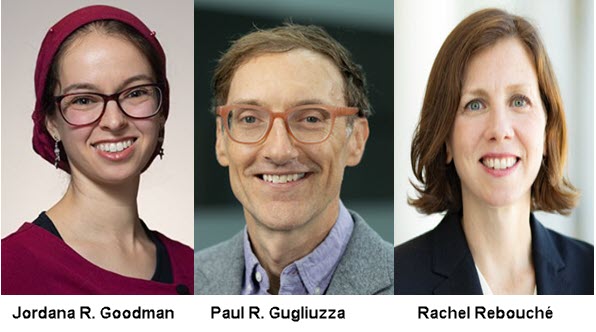
Excerpted From: Jordana R. Goodman, Paul R. Gugliuzza and Rachel Rebouché, Inequality on Appeal: The Intersection of Race and Gender in Patent Litigation, 58 U.C. Davis Law Review 829 (December, 2024) (245 Footnotes) (Full Document)
 In June 2023, the U.S. Supreme Court outlawed affirmative action in higher education admissions. Writing for the Court, Chief Justice Roberts quoted from Justice Harlan's dissent in Plessy v. Ferguson to argue that, “[i]n view of the Constitution, in the eye of the law, there is in this country no superior, dominant, ruling class of citizens. There is no caste here.”
The dissenters disagreed. Justice Sotomayor responded that it is fantasy to believe that the Court's rule of “race-blindness” will remedy discrimination “in an endemically segregated society where race has always mattered and continues to matter.” “[R]acial inequality,” her opinion noted, “will persist so long as it is ignored.”
In the spirit of revealing inequality, this Article presents a novel study of demographics in an area of law practice that, at first glance, seems far removed from ongoing conversations about systemic racism and sexism: patent law. This Article spotlights the persistence of racial inequality, gender inequality, and the intersection of the two in the field. For instance, though less than half of all lawyers in the United States today are white men, white men delivered more than four-fifths of all appellate oral arguments in patent cases from 2010 through 2019.
The dominance of white men in patent litigation is often attributed to the underrepresentation of women and people of color in the scientific and technical fields thought necessary to practice patent law. But the disparities we document are, we contend, better understood to flow from broader, structural barriers to the advancement of people who have not traditionally occupied positions of power in “elite” professions, such as large law firm litigation.
For example, we find vast disparities along racial and gender lines among the law firm lawyers who present patent case arguments on behalf of litigants from the private sector -- a result that is perhaps unsurprising given the well-documented inequalities in law practice and the corporate world more generally. But what is surprising is that racial and gender disparities dwindle when we look only at lawyers who argue patent cases on behalf of the government. Among government patent lawyers, the proportion who are women, people of color, or women of color equal (and, in fact, slightly exceeds) the proportion of women, people of color, and women of color in the total population of practicing lawyers.
Despite Chief Justice Roberts's claim, there is a caste system at work. This Article offers one stark illustration, as well as some ideas about how to change course.
U.S. Court of Appeals for the Federal Circuit, which has exclusive jurisdiction over all patent appeals nationwide, sits for oral arguments one week a month. During any given argument week, the court will hear roughly 50 patent cases, meaning that about 100 lawyers will stand up to speak in its courthouse, barely a block away from the White House. On average, 93 of those 100 lawyers will be white. Five will be Asian. Only one will be Black. And only one will be Hispanic or Latino.
The odds that a Black or Latina woman will argue before the Federal Circuit in a patent case are vanishingly small. According to the first-of-its-kind, hand-coded dataset of the gender and perceived race of thousands of attorneys we developed for this Article, women of color delivered only 125 arguments in Federal Circuit patent cases over the ten years from 2010 through 2019, accounting for barely 2% of the 6,392 arguments in our dataset. Only 28 of those 125 arguments were by Black women and 24 were by Latina women. By contrast, white male attorneys presented 5,262 arguments, or 82.3% of the total. At the same time, of the twelve active judges presently on the Federal Circuit, five are women, four are persons of color (two judges are Latino, one is Asian, and one is Black), two of whom are women of color (one is Latina, another is Black).
Patent law, in the not-too-distant past, was primarily the domain of specialist lawyers at boutique firms who had backgrounds in the hard sciences. But no more. Many boutique firms have been gobbled up by Big Law behemoths; patent cases today, particularly on appeal, are litigated by the most prominent lawyers at the country's largest, most prestigious law firms. Patent law practice, in other words, has gone mainstream. It is a big dollar, high profile area on par with other fields: securities, antitrust, and so on, where the litigants are, in any given case, among the largest corporations in the world.
By studying the practice of patent litigation, we can learn a lot about private law practice generally. In a prior Article, which was the first to broach the question of inequality in patent litigation, two of us documented the glaring absence of women lawyers before the Federal Circuit. This Article builds on that work in three ways. First, it updates our existing dataset of thousands of Federal Circuit patent lawyers to include those lawyers' perceived race. Second, this expanded dataset allows us to analyze questions of intersectionality: how race and gender interact to affect the roles lawyers play in the patent system. And, third, we have coded the vast majority of Federal Circuit patent cases in our dataset for outcomes, which enables us to analyze whether particular cohorts of attorneys are more or less likely to win on appeal.
The study we present contains several important insights. As already discussed, the bar arguing Federal Circuit patent appeals is overwhelmingly white (93% of all arguments) and overwhelmingly male (89% of all arguments). Yet, among the few lawyers of color who argue patent cases at the Federal Circuit, there are noticeably more women: 27% of arguments by lawyers of color were delivered by women, as compared to 11% of arguments by women among white lawyers. (As we explain in more detail below, over half of the arguments by lawyers of color in our dataset were by lawyers we coded as Asian; 16% were by lawyers we coded as Hispanic or Latino and 14% were by lawyers we coded as Black.
One way to interpret our finding that the lawyers of color in our dataset are more likely to be women, as compared to women in the cohort of white lawyers, is that a lawyer who surmounts one barrier to professional success is more likely to surmount other barriers -- an interesting corollary to the phenomenon of “prove it again” bias, or the idea that women and people of color, and especially women of color, must go “above and beyond” to get the same recognition as their colleagues.
In addition, building on our prior work showing that government patent lawyers are five times more likely to be women than their private sector counterparts, we find in this Article that government patent lawyers are more than twice as likely to be persons of color than their private sector counterparts.
Combining our gender and race data in an intersectional analysis reveals further disparities between the government and the private sector. Namely, our data indicate that an attorney arguing a Federal Circuit patent case for the government is over ten times more likely to be a woman of color than an attorney arguing for a private-sector litigant. In fact, though the number of government arguments in our dataset (567) is less than one-tenth the number of arguments by privatesector lawyers (5,825), the government had a greater number of arguments presented by women of color (65) than the private sector (60).
The proportion of government lawyers in our dataset who are women, people of color, or women of color exceed the proportion of lawyers (not just patent lawyers) who identify as women, people of color, or women of color in the U.S. population as a whole. The private-sector lawyers in our dataset, by contrast, are more likely to be white and male than individuals in the overall population of lawyers. Those findings, we think, cast doubt on the notion that inequality in patent practice is mainly due to a narrow “pipeline” of women, people of color, and women of color with scientific or technical backgrounds. To the contrary, there are many women, people of color, and women of color arguing patent cases at the highest level -- yet they are not getting opportunities to do so in law firm practice.
Why do we see the government cultivating equality and inclusion more successfully than the private sector? Perhaps it is because of the oft-discussed work-life flexibility that comes with government jobs. But, in patent litigation, at least, we think the nature of the work and the culture of the workplace matter, too. In government practice, the lawyers who work hardest on a case are rewarded with the opportunity to argue that case, which leads to a more diverse population of arguing attorneys as compared with the private sector, where appellate oral arguments are often handled by the most senior attorneys, regardless of who worked hardest on the case beforehand.
For all the disparities we document among lawyers arguing patent cases at the Federal Circuit, neither race nor gender nor the combination of the two correlate to case outcomes. Whether represented by a male lawyer or a female lawyer, a white lawyer or a lawyer of color, or any race and gender combination, appellants in Federal Circuit patent cases win about a quarter of the time and appellees win about three-quarters of the time.
There is, however, one identifiable cohort of attorneys who win more frequently than all others: a small group of 65 private-sector lawyers (out of the over 2,500 in our dataset) who argue patent cases at the Federal Circuit more than anyone else. When seeking to overturn a judgment of a federal district court, the Patent and Trademark Office, or the International Trade Commission in a patent case, those frequent Federal Circuit advocates succeed 41% of the time, as compared to a 24% win rate for the other private-sector lawyers in our dataset. That finding adds a patent-law angle to a growing literature documenting the remarkable influence a small group of specialist appellate litigators (mostly white and male, though not any more so than the appellate patent bar overall) have had on the U.S. legal system.
In addition to providing a rich, descriptive analysis of the appellate patent bar and case outcomes, our study suggests steps that might increase diversity and equity in patent practice and the legal profession more generally. Our finding that Federal Circuit case outcomes do not correlate with the race or gender of the arguing lawyer undercuts any stereotypes held by clients and senior law firm partners about who is more likely to succeed in arguing a case.
Yet our data also raise difficult questions about what, exactly, we aim to accomplish when we pursue equal opportunity in law practice. Though our findings suggest that lawyers' gender and race have little connection to case outcomes, what seems to correlate with outcomes is having the resources to hire from the small cohort of the most experienced Federal Circuit lawyers in the country. Promoting racial and gender diversity without systemic change may not disrupt those power and resource inequalities. And so we offer some thoughts about how lawyers' economic incentives and law firms' cultural norms might be altered to interrupt the bias we document in our study of appellate patent litigation.
The remainder of this Article proceeds as follows. Part I situates our project in the growing literature on race, gender, and intersectionality in patent law and practice. Part II describes the methodology of our empirical study. Part III presents our intersectional analysis of the race and gender of lawyers arguing patent appeals at the Federal Circuit. Part IV explores several implications of that analysis and leverages our data to address broader questions about how to achieve greater equity in the legal profession.
[. . .]
As much as six Supreme Court justices might wish it to be, we do not live in a colorblind society. Ignoring the stark racial and gender disparities in elite positions will not make those disparities go away.
One limitation of our study is that we cannot be sure about the root causes of the underrepresentation we bring to light. But, given the ongoing legal and political challenges to efforts to remedy -- or even to talk about -- the effects of the racial and gender injustice that have long defined this country, we join scholars and practitioners who want the legal profession to be more inclusive and able to reckon with practices of exclusion, whatever their cause. Working toward that reckoning, as we have tried to do modestly in this Article, is the responsibility of future generations of lawyers, and it is vital to the integrity and the future of the legal system.
Assistant Professor of Law, Chicago-Kent College of Law, Illinois Institute of Technology; Innovator in Residence, Massachusetts Institute of Technology.
James E. Beasley Professor of Law, Temple University Beasley School of Law.
Kean Family Dean and Peter J. Liacouras Professor of Law, Temple University Beasley School of Law.